The Llanchama is a parchment, or textile, made from the inner bark of the sapucaia tree (Poulsania armata) that grows in the Amazon jungle. The process of making this parchment is days long and labor intensive, and, as with most indigenous art forms, is passed down from generation to generation.
The Bora indigenous people of the Peruvian Amazon have used this material to make garments, blankets, diapers, and as a natural substitute for clothing. Who created the first Llanchama, or when, is unknown, but what we do know is that it has been used for centuries.
I am not the first artist to use the Llanchama as a canvas for painting. The very well-known Peruvian artist, Francisco Grippa, has been using it for years. And the Bora people decorate it with natural plant dyes to use in some ceremonies.
I recently travelled to the Peruvian Amazon to both photograph wildlife and to find Llanchama. The idea behind the endeavor was to see firsthand and document the making of this unique parchment. I was surprised at how difficult and intricate the process was, even when making a very small piece. After much searching, I found an older Bora who skillfully made a very large and very beautiful Llanchama.
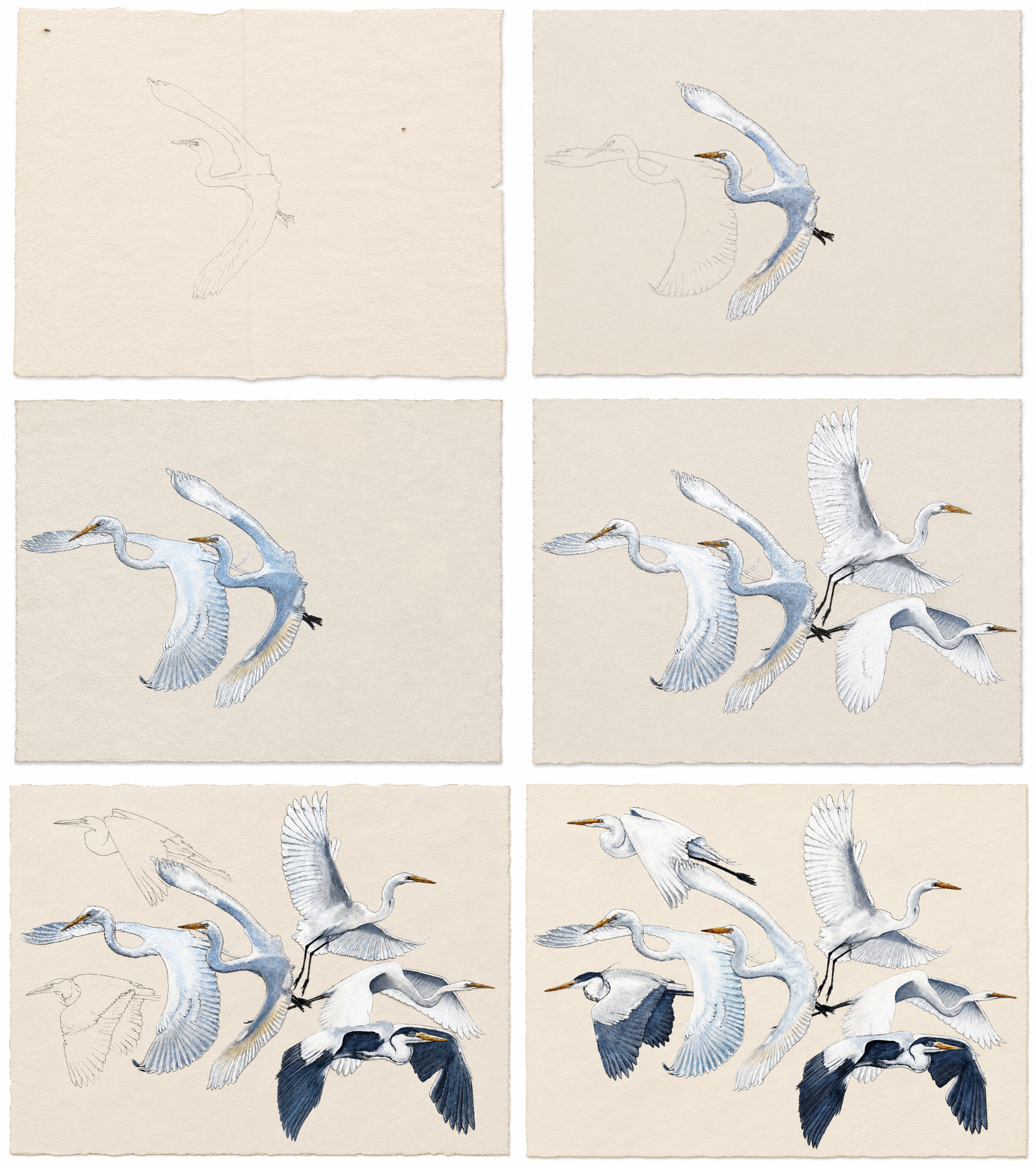
The question for me then became how to best prepare this cloth to ensure it lay flat and handle being painted. Perhaps an abstract art piece would have been more forgiving, but I wanted to do something detailed, something about the Amazon, and above all, something that highlighted and honored the incredible texture of the material. I also wasn’t sure which medium would work best (ink? acrylic? oil?), or if the surface needed to be primed first. In the end, I used conte crayon, ink, acrylics and gouache, going layer by layer until I found my subjects: a Cocoi heron and two Great white egrets majestically flying over the labyrinths of the Amazon.
After having successfully worked with the Peruvian indigenous bark known as Llanchama, what became obvious was the lack of availability of this material. I could only get it from the Bora, the indigenous group that lived in the Amazon River and made this cloth. In the past, and I mean many decades ago, the Bora made this bark material to use as cloth, which they adorned with symbols made from inks produced from various vines. But today they produce this material, which is very labor intensive, only for ceremonial purposes or to sell to tourists. In many ways the entire process is becoming a lost art, and only the elders still have the skills and knowledge of how to make it.
As a result, and wanting to further develop this style of painting wildlife, where only the subjects are included and the background is left to the imagination of the observer, I looked to other materials that could provide a rich setting. At my daughter’s suggestion, I tried raw Belgian linen, the most expensive canvas available for fine art, but allowed the fine knit cloth with its rich earth color to remain untouched. This worked quite well in producing the intended result, highlighting the subject against an invisible background.
Of course, part of the charm of the Llanchama is its origin as well as the difficulty in making it, which is an art unto itself, but it is also true that the surface and the natural characteristics of the cloth itself express a beauty which is impossible to replicate.
I also experimented on wood and again, it does not replace Llanchama, but it does have promise, particularly if I can acquire more rare wood.
I will continue to experiment with Llanchama but will also work with other materials while illustrating the various wildlife.